

• Manufacturing Outlook
  • /
  • Lubricant
  • /
  • Automatic Single Point Lubricator of The Year
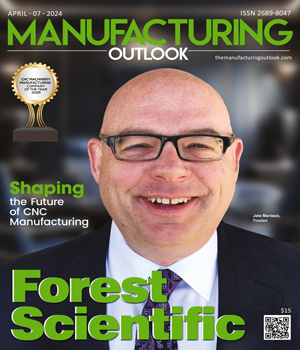
  • Forest Scientific: Redefining CNC Solutions with Innovation and Unmatched Client Support

    Automatic Single Point Lubricator of The Year - 2025

    The manufacturing technology sector continues to redefine modern industry, with advancements in precision, automation, and efficiency setting the stage for unprecedented productivity. At the heart of this transformation are two pivotal innovations: Computer Numerical Control (CNC) machinery and Automatic Single-Point Lubricators (ASPLs). These technologies exemplify how precision engineering and automation are addressing long-standing challenges while paving the way for future advancements.

    CNC machinery has become synonymous with high-precision manufacturing, catering to industries ranging from aerospace and automotive to medical devices and consumer electronics. By replacing manual operation with computer-controlled precision, CNC machines ensure consistent quality, reduce human error, and dramatically shorten production cycles.

    One of the most significant trends in CNC machinery today is the integration of AI and IoT technologies. Smart CNC systems now collect and analyze data in real time, enabling predictive maintenance and reducing downtime. These machines also communicate seamlessly with other components in a smart factory, creating a synchronized ecosystem that optimizes resource use and boosts throughput.

    Moreover, advancements in multi-axis CNC machines have expanded the range of complex geometries manufacturers can produce. The ability to mill, turn, and grind in a single setup reduces material handling and improves accuracy. This capability is particularly critical for industries like aerospace, where even the smallest deviations can have catastrophic consequences.

    While CNC machinery drives innovation in production, ASPLs address one of the most critical yet often overlooked aspects of manufacturing: maintenance. Proper lubrication is essential to ensure the smooth operation of machinery, minimize wear and tear, and extend equipment lifespan. However, manual lubrication is time-consuming, prone to errors, and can disrupt production schedules.

    The convergence of CNC machinery and ASPLs highlights the transformative power of manufacturing technology. Together, they embody the principles of precision, automation, and efficiency that are driving the industry forward. As these technologies evolve, they will undoubtedly unlock new possibilities, ensuring that manufacturing remains at the forefront of innovation in a rapidly changing world.

    For businesses navigating this landscape, embracing these advancements is no longer a choice but a necessity. By investing in state-of-the-art machinery and maintenance solutions, manufacturers can secure their position in an increasingly competitive global market while contributing to a more sustainable industrial future.


      Automatic Single Point Lubricator of The Year

      Pulsarlube USA is a provider of industrial lubrication solutions, utilizing patented cutting-edge microprocessor technology. It offers a wide range of superior products to meet the needs of its customers including innovative and reliable Automatic Single Point Lubricators. Backed by years of research and development provides high quality products and services worldwide through its well-established distribution network. ... read full profile

    Lubricant Info

    Q1
    What Do Top Lubricant Manufacturing Companies Do?
    Top Lubricant Manufacturing Companies develop and supply oils, greases, fluids and specialty lubrication products used to reduce friction, manage heat and limit wear in industrial equipment. Their work supports bearings, gears, compressors, conveyors, hydraulic systems and production machinery that must run under pressure, temperature variation or contamination risk. Strong lubricant manufacturing companies also help users match product chemistry to real working conditions, including load, speed, moisture, food-contact rules or maintenance schedules.
    Q2
    Why Does Lubricant Manufacturing Matter to Industrial Buyers Now?
    Machine downtime, energy waste and premature part failure have made lubrication a practical cost issue, not just a procurement line item. Top Lubricant Manufacturing Companies matter because the right product can extend service intervals, protect critical assets and reduce unplanned stoppages. Demand is also shaped by tighter environmental rules, longer equipment life cycles and interest in synthetic lubricants, biodegradable fluids and condition-based maintenance. Industrial lubricant companies are increasingly judged on performance evidence, formulation control and technical support, not price alone.
    Q3
    How Should Manufacturers Evaluate Lubricant Manufacturing Companies?
    Evaluation should begin with application fit. Buyers need to know whether a supplier understands load ratings, viscosity requirements, contamination exposure, temperature ranges and equipment warranties. Documentation matters as well: safety data sheets, compliance records, batch consistency and testing protocols should be easy to review. Reliable lubricant manufacturers also provide guidance on storage, changeover, sampling and disposal. A low-cost product can become expensive if it causes residue buildup, seal problems or shorter maintenance intervals.
    Q4
    What Business Value Do These Companies Deliver?
    The value of Top Lubricant Manufacturing Companies is most visible when machinery runs longer between service events. Better lubrication can lower bearing wear, reduce heat, protect metal surfaces and help maintenance teams plan shutdowns instead of reacting to failures. In heavy manufacturing, mining, food processing or transportation, these gains show up in uptime, cleaner inspections and fewer emergency repairs. Manufacturing lubrication solutions also support consistency: the same line, press or gearbox behaves more predictably shift after shift.
    Q5
    How Are Technology And Formulation Expertise Changing The Category?
    Lubricant development now depends on base oil selection, additive chemistry, lab testing and field feedback. Synthetic fluids, high-performance greases and specialty additives can address oxidation, corrosion, foam control, extreme pressure and water separation. Digital maintenance practices are also changing expectations. Oil analysis, sensor data and equipment history help teams decide when lubricant should be replaced rather than relying only on fixed schedules. The strongest lubricant providers connect product performance with maintenance evidence, not vague claims.
    Q6
    What Should Industrial Decision-Makers Prioritize When Comparing Providers?
    Industrial teams should compare technical depth, product range, testing discipline, delivery reliability and support after purchase. Top Lubricant Manufacturing Companies should be able to explain why a formulation suits a specific machine, not simply provide a catalog match. Buyers should also consider packaging options, inventory planning, regional availability and help during product conversion. The best fit is usually a provider that can reduce friction in the equipment and in the purchasing, maintenance and compliance process.
    Take Me Top